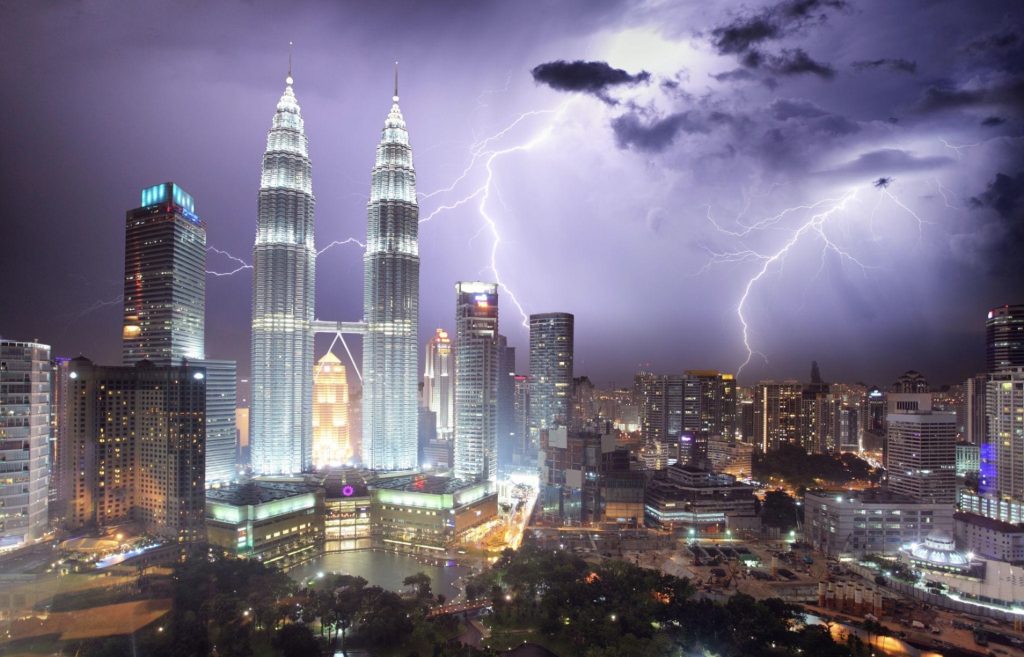
Malaysia does not merely experience rain. Malaysia lives by it.
In many countries, rain is seasonal background noise — a passing inconvenience between sunshine and clear skies. But in Malaysia, rain shapes architecture, traffic patterns, business hours, agriculture, fashion, daily routines, and even national temperament. It is deeply embedded into the rhythm of life.
To understand Malaysia, one must first understand its rain.
A Nation Between Two Monsoons
Malaysia sits close to the equator, inside one of the world’s most humid tropical regions. Temperatures remain relatively constant throughout the year, but rainfall changes dramatically depending on the monsoon cycle.
The country is influenced by two major monsoon systems:
- The Northeast Monsoon, typically between November and March
- The Southwest Monsoon, usually between May and September
Of the two, the Northeast Monsoon is the most intense. Moist winds travelling across the South China Sea carry enormous volumes of rain toward the eastern coastline of Peninsular Malaysia and parts of Borneo.
States such as Kelantan, Terengganu, and Pahang receive some of the heaviest seasonal rainfall in the country. Fishing communities monitor weather forecasts closely. River levels become daily conversation topics. Entire villages adapt their schedules around incoming storms.
Meanwhile, western urban centres like Kuala Lumpur, Petaling Jaya, and George Town experience a different type of rain culture — sudden tropical downpours that can arrive within minutes and disappear just as quickly.
The Malaysian sky changes moods fast.
A blazing afternoon can become pitch-black by 5 PM. Towering cumulonimbus clouds gather over highways and shopping malls. Lightning cracks above skyscrapers while commuters refresh weather apps, hoping the storm passes before the evening rush hour.
Rain as Daily Infrastructure
Malaysia’s cities are built with rain in mind.
Covered walkways connect malls and train stations. Elevated highways include complex drainage systems. Shop owners keep long metal hooks nearby to pull down transparent plastic curtains when storms arrive. Even ordinary Malaysians instinctively organise life around the possibility of rain.
Umbrellas remain permanently stored inside cars. Motorcyclists travel with emergency ponchos folded beneath seats. Laundry is hung with one eye constantly watching the sky.
Rain also dictates traffic behaviour more than official schedules do.
A 20-minute storm in the Klang Valley can instantly double travel times. Flooded underpasses, reduced visibility, and cautious drivers transform major roads into slow-moving rivers of red brake lights. Malaysians even have a phrase that perfectly captures this national reality:
“Hujan sikit pun jam.”
Even a little rain causes traffic.
And yet, despite constant complaints, there is also quiet acceptance. Rain is not treated as an abnormal disruption. It is treated as an unavoidable participant in urban life.
The Economy of Rain
The rainy season is not merely atmospheric. It has enormous economic consequences.
Malaysia’s agriculture sector depends heavily on rainfall cycles. Palm oil plantations, rice fields, rubber estates, and fruit farms all rely on predictable weather patterns. Too little rain threatens crop production. Too much rain damages transportation routes, harvesting schedules, and soil stability.
For fishermen along the east coast, monsoon season can temporarily halt operations entirely. Rough seas and dangerous waves force many small fishing boats to remain ashore for weeks.
Tourism also shifts according to the monsoon calendar.
Beach islands such as Perhentian Islands and Redang Island become highly seasonal destinations because rough waters limit ferry access during monsoon months. Resorts close temporarily, diving activities pause, and coastal economies slow down.
At the same time, rainfall supports Malaysia’s hydroelectric infrastructure, replenishes reservoirs, cools forests, and sustains biodiversity across some of the oldest rainforests on Earth.
Rain is simultaneously an economic risk and an economic necessity.
The Emotional Landscape of Rain
Few sounds are more Malaysian than heavy rain striking zinc rooftops.
For many Malaysians, rain carries emotional memory. It recalls childhood afternoons sleeping beneath blankets while thunderstorms rolled across the neighbourhood. It evokes memories of school holidays, football matches interrupted by lightning, and the smell of wet soil rising after sudden storms.
Rain changes the emotional atmosphere of Malaysian cities.
In places like Kuala Lumpur, glass skyscrapers disappear behind curtains of mist. Neon reflections shimmer across flooded pavements. Steam rises from roadside food stalls as customers crowd beneath sheltered awnings.
Nowhere feels more alive during rain than the mamak restaurant.
Under fluorescent lights and rattling metal roofs, strangers gather over teh tarik and roti canai while football matches play on suspended televisions. Conversations slow down. People linger longer. Rain briefly forces the city to pause.
In a country constantly rushing forward, storms create temporary stillness.
Climate Change and the Future of Malaysian Rain
Meteorologists and climate researchers increasingly warn that Malaysia’s weather patterns are becoming more erratic.
Urbanisation has intensified many drainage problems, especially in rapidly expanding metropolitan regions. Forest clearing, river modification, and uncontrolled development reduce the land’s natural ability to absorb water. As cities expand outward, concrete replaces wetlands and vegetation that once acted as natural flood buffers.
The result is a growing sense of unpredictability.
Storms appear stronger. Heat feels more intense between rainfall periods. Flash floods emerge faster than before. Areas historically unaffected by serious flooding now experience temporary inundation after prolonged downpours.
For younger Malaysians, this may become the defining environmental issue of their generation.
The challenge is no longer simply surviving the rainy season. It is redesigning cities capable of coexisting with increasingly volatile weather.
Architects, engineers, and urban planners are already discussing flood-resilient infrastructure, water-sensitive urban design, elevated public spaces, and smarter drainage systems. Across Southeast Asia, climate adaptation is slowly becoming not just an environmental issue, but an urban survival strategy.
Malaysia’s Permanent Relationship With Rain
Despite the inconvenience, few Malaysians truly hate the rain.
People complain about traffic. They complain about wet shoes, delayed commutes, and flooded parking lots. Yet the first cool winds before a storm still bring relief after suffocating tropical heat.
Rain cools overheated cities. It feeds rivers and forests. It gives Malaysia its deep green landscapes and dramatic evening skies.
Without rain, Malaysia would not look, feel, or even behave the same way.
The country’s identity has been shaped beneath monsoon clouds for centuries — from kampung villages beside muddy rivers to modern skylines crowned by glass towers like Merdeka 118 and Petronas Towers.
And perhaps that is the paradox of Malaysia’s rainy season:
It can frustrate, disrupt, delay, and overwhelm.
But it also nourishes, cools, unites, and defines the nation itself.