
In the early days of human civilization, people depended on natural materials such as wood, clay, glass, leather, and metal to create tools and household items. These materials were useful, but they were often heavy, expensive, or difficult to shape. Scientists and inventors dreamed of finding a new material that was lighter, stronger, and easier to produce.
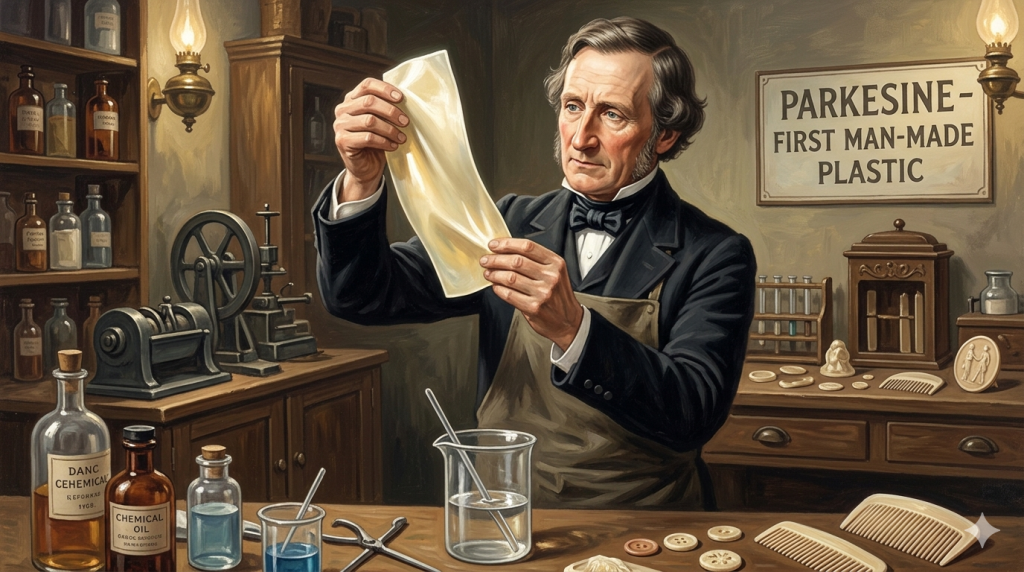
That dream slowly became reality in 1862 when Alexander Parkes, an inventor from United Kingdom, introduced a material called Parkesine at a grand exhibition in London. It was made from cellulose taken from plants and could be molded into different shapes when heated. People were fascinated because it looked modern and unlike anything they had seen before. This invention is widely recognized as the world’s first man-made plastic.
Although Parkesine was innovative, it was still imperfect and expensive to manufacture. Years later, in 1907, another scientist named Leo Baekeland created a stronger and more practical plastic known as Bakelite. Unlike earlier materials, Bakelite could resist heat and electricity, making it extremely useful for industrial products. Soon, it appeared in radios, telephones, electrical equipment, buttons, and kitchen tools.
As the 20th century progressed, scientists developed many new forms of plastic, including polyethylene, polypropylene, PVC, and nylon. Factories discovered that plastics were lightweight, durable, waterproof, and cheap to mass-produce. Plastic quickly transformed industries such as packaging, transportation, medicine, construction, and electronics.
Today, plastic is found almost everywhere in daily life — from water bottles and food containers to cars, computers, and medical devices. What started as a small scientific experiment eventually became one of the most influential inventions in modern history, shaping the world in ways early inventors could never have imagined.