
In the coastal town of Marinda, plastic waste had become a daily sight—drifting into drains, clinging to beaches, and choking the fishing nets that once fed the village. One day, a small biotech startup introduced a new invention: edible plastic.
At first, it felt like a miracle. The wrappers around snacks dissolved harmlessly in water or could even be eaten along with the food. Schoolchildren laughed as they “ate” their candy wrappers. Fishermen noticed fewer plastic scraps floating in the sea. The town council proudly called it the beginning of a cleaner future.
But change rarely arrives without complications.
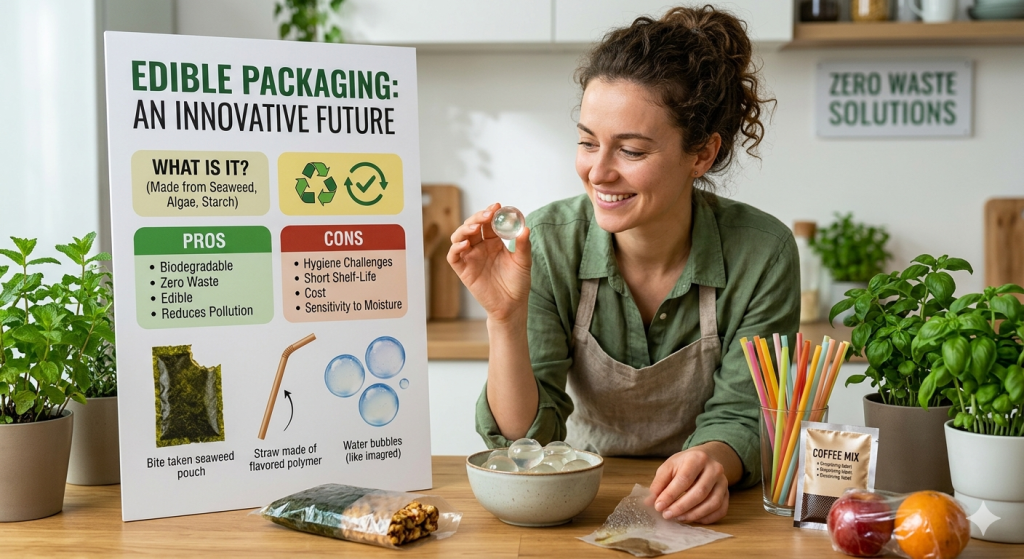
Within months, problems started to appear. Some edible plastics spoiled too quickly in humid storage, causing food to go bad before reaching shops. Others were accidentally eaten by animals in large amounts, disrupting their digestion. Manufacturers also found the material expensive, and small businesses struggled to afford it.
A local engineer named Aina studied both sides. She saw the promise: less long-lasting pollution, reduced landfill waste, and safer oceans. But she also saw the limitations: higher costs, storage challenges, and the risk of unintended consumption.
One evening, she stood by the shore watching waves roll in. In her notebook, she wrote a simple conclusion:
“Edible plastic is not a replacement for responsibility. It is a tool. Useful, but incomplete.”
The town eventually adopted a balanced approach—using edible plastics only for certain products while still reducing overall plastic use.
And slowly, Marinda learned a deeper truth: no single invention saves the world on its own—but thoughtful choices can still move it forward.